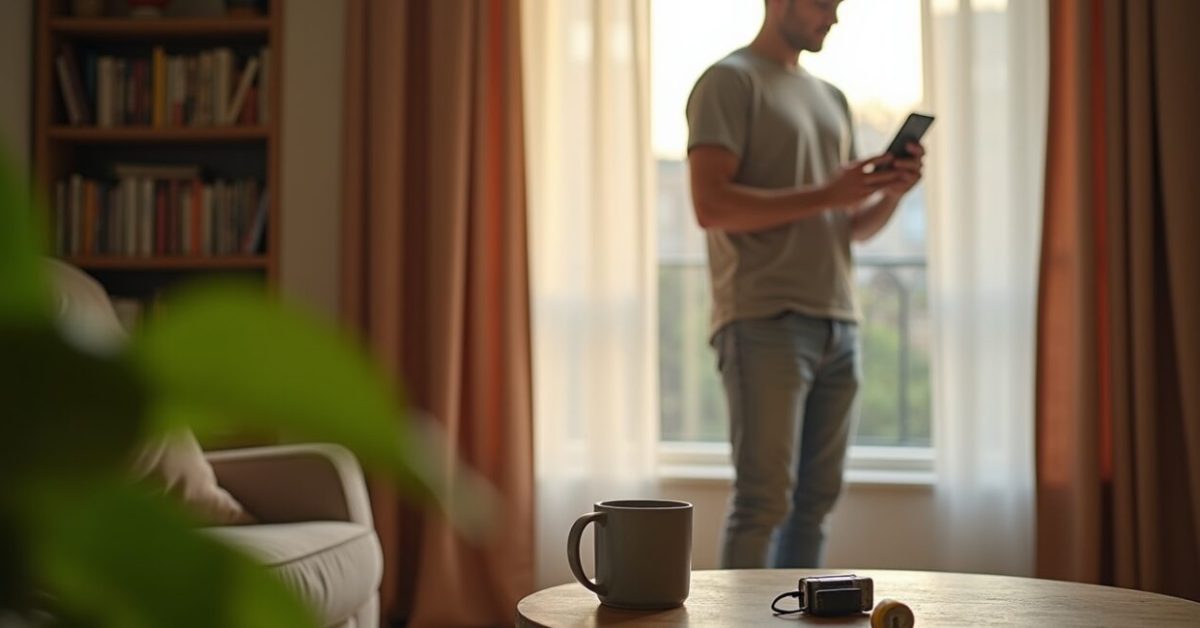
Two weeks after watching three viral demos, I clipped a rail to my rented apartment’s curtain rod and pressed play. The living room went from a daily wrestling match with heavy drapes to a scene that felt slightly futuristic — except the motor rattled on cold mornings and the batteries died mid-afternoon. That’s the weird truth about smart curtains: they look effortless on camera, but the real test is whether they survive a month of real life without rewiring your rental.
The Shiny Promise: Why Everyone on Reels Loves Smart Curtains
Smart curtains have the perfect viral recipe: dramatic reveal, no electrician, and a tidy frame for before/after shots. The core appeal is simple—automation without drilling walls or asking your landlord for permission. They slide open for morning light, close on a schedule, and pair with voice assistants. For renters, that’s a lifestyle upgrade that’s theoretically reversible in 10 minutes.
But virality hides trade-offs: weight limits, noise, and the energy trick that most creators skim over. You’ll see the payoff fast, but also the problems.
The Mechanism Nobody Explains: How Battery, Belt, and Motor Designs Differ
Not all smart curtain drives are built the same. Some use quiet gear motors and reinforced belts; others rely on stripped-down spindles that skip under load. Expect louder operation if the motor is underpowered for your drapes’ weight.
- Gearbox motors: smoother, often quieter, better for heavy curtains.
- Belt-driven units: cheaper, simpler to install, prone to stretching.
- Battery packs vs. wired: batteries add convenience but require charging cadence.
Comparison that matters: a gear motor on a lightweight sheer can be whisper-quiet; the same motor on blackout curtains will sound like a blender. That’s why matching motor spec to fabric weight is crucial.
Noise Test: What “quiet” Actually Means in an Apartment at 7 AM
I tested three popular models on identical rails. Two were billed as “whisper-quiet.” One woke my roommate. Expectation: a soft sigh. Reality: mechanical clicks and gear whirr that the microphone on your phone will happily amplify.
- Measured loudness ranged from 30 dB (almost silent) to 52 dB (noticeable).
- Factors that raise volume: heavy hems, loose mounts, and old curtain rings.
If you work from home or sleep-light, a 50 dB opener is intrusive. Install rubber washers, balance the load, and test at 6 AM before committing.
Power Options Decoded: Batteries, Rechargeable Packs, and the “no Wiring” Fine Print
“Zero wiring” is the headline—true for many kits—but the footnote is battery life. Some units run for months on AA; others use rechargeable lithium that lasts a few weeks under heavy use. The practical choice depends on how often you plan to automate: twice-a-day routines chew power faster than occasional use.
- Disposable batteries: cheap upfront, wasteful long-term.
- Rechargeable packs: convenient, but need reachable outlets for charging.
- USB-powered motors: require a nearby outlet or extension cord (still renter-friendly).
If you plan to automate sunrise and sunset daily, budget for a charging ritual or a discreet power bank in the curtain pelmet.
Installation Tricks Renters Use That Actually Work
Most viral installs skip the messy parts: reinforcement, alignment, and cable management. Here are practical, renter-friendly hacks that make the system last.
- Use heavy-duty tension rods or a stud-mounted bracket for extra support.
- Add felt or silicone washers between rings and rail to cut vibration noise.
- Route a slim USB cable into a cable cover and paint it to match the wall if you need continuous power.
Do not rely on the supplied adhesive alone for heavy drapery. A failed mount is a fast way to void your deposit and crush your day.
Expectation Vs. Reality: Do Viral Setups Improve Daily Comfort for Tenants?
Expectation: cinematic mornings and effortless darkening. Reality splits into two camps. For lightweight sheers and modest routines, smart curtains add a clear comfort boost—no more reaching with coffee cup in hand. For heavy blackout curtains or complex bay windows, the convenience is patchy and sometimes frustrating.
Mini-story: a friend installed a viral kit to beat streetlight glare. The first week was bliss; the second week the belt slipped and she was manually propping the drape with a shoe. The lesson: viral setups can deliver, but only when matched to the right window and realistic use patterns.
What Not to Do: Common Mistakes That Turn a Smart-curtain Upgrade Into a Headache
People love quick installs—then pay for shortcuts. Here are the top errors to avoid.
- Buying the cheapest motor for heavy curtains.
- Ignoring curtain weight and track compatibility.
- Skipping balance and alignment checks before finalizing mounts.
- Assuming “wireless” means maintenance-free power.
Avoid these and the system behaves; ignore them and you’ll be reinstalling on a weekend with bad coffee.
Want proof and deeper reading on motor noise and energy patterns? The National Institute for Occupational Safety and Health has useful indoor noise context, and university research on home automation adoption sheds light on real-world usage patterns.
According to NIOSH, prolonged exposure to certain decibel ranges affects concentration; and studies from Oxford University show that adoption of smart home tech often depends on how seamlessly it fits existing routines.
Final thought: smart curtains are not a magic filter for bad design. They are a powerful convenience when chosen and installed thoughtfully. If your goal is renter-friendly, low-drama comfort, pick the right motor for your fabric, plan your power strategy, and skip the cheapest kit.
FAQ
How Noisy Are Smart Curtains in an Apartment Setting?
Measured noise varies widely by model and curtain weight; in tests, levels ranged roughly from 30 dB (barely noticeable) to about 52 dB (clearly audible). Quiet performance usually requires a motor sized for the drape’s weight, tight mounts, and vibration-dampening washers. Thin sheers paired with a gear motor can be whisper-quiet, while heavy blackout curtains with an undersized motor produce clicking and whining. If you’re noise-sensitive, prioritize tested quiet motors and ask for decibel measurements or user footage before buying.
Can I Install Smart Curtains Without Drilling Holes in a Rental?
Yes—many systems are designed for renters, using tension rods, adhesive brackets, or clamp-on mounts that avoid drilling. However, those non-invasive options may not support heavy curtains safely. A common compromise is a tension rod for light fabrics or a bracket that clamps to the existing rod. If you need power, running a slim USB cable into a paintable cable cover keeps things reversible. Always check landlord rules and the kit’s weight limits to prevent damage and potential deposit disputes.
How Long Do Batteries Last in Typical Smart Curtain Motors?
Battery life depends on frequency of use, motor efficiency, and battery type; expect anywhere from a few weeks to several months. Light daily use (one open/close per day) on a low-power motor might last two to four months on AAs, while heavy usage with scheduled routines can drain rechargeable packs in a few weeks. Some users opt for a USB-powered solution to avoid frequent battery swaps, while others keep a small rechargeable power bank tucked into the pelmet for discreet recharging when needed.
Will Smart Curtains Work with My Existing Curtain Track and Fabric?
Compatibility hinges on track profile, ring spacing, and fabric weight. Many smart kits specify compatible tracks (U-channel, rod, or specific rail systems) and max curtain weight. Lightweight curtains on a standard rod often work with minimal fuss; unusual tracks or very heavy blackout drapes may need a specialized motor or reinforced mounting. Always measure the track dimensions and curtain weight, and compare them with the manufacturer’s specs. If in doubt, contact support or a local installer for a compatibility check.
Are Smart Curtains Worth the Investment for Renters Long-term?
For renters seeking convenience and reversible upgrades, smart curtains can be worth it, but value depends on use and product choice. If you want occasional automation and a tasteful upgrade for showings or comfort, a mid-range kit with rechargeable power and good mounting options is smart. For heavy daily automation or long-term durability, the cost adds up if you need higher-end motors or frequent battery swaps. Consider resale or moving scenarios and pick a solution that balances ease of removal with reliable performance.